

by Allen Ginsberg
SIGNED | Rhino Records | 1994
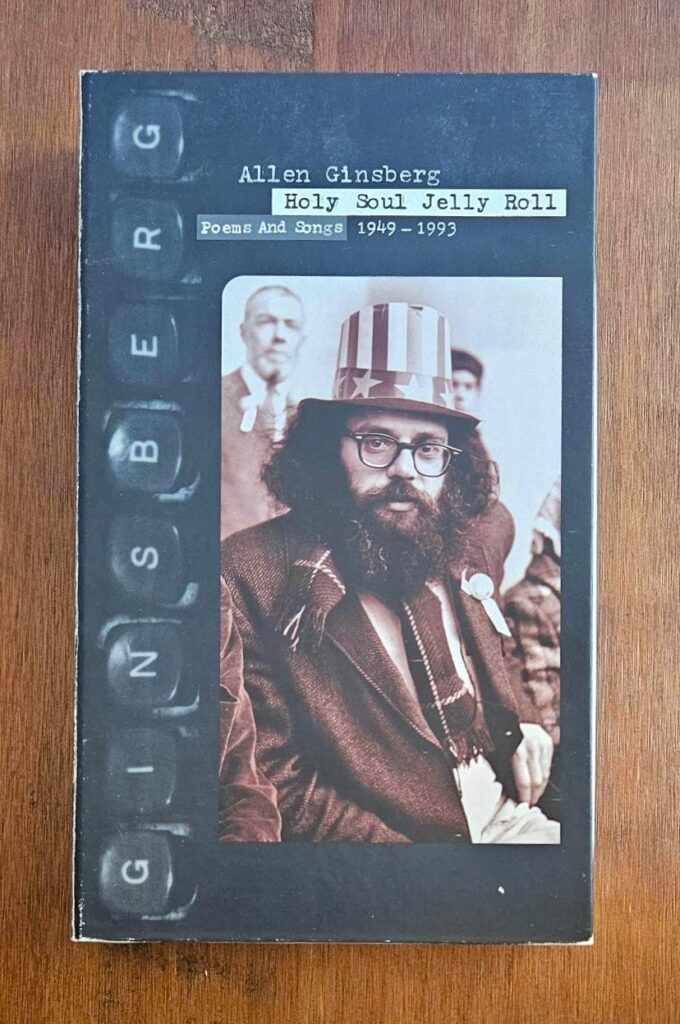
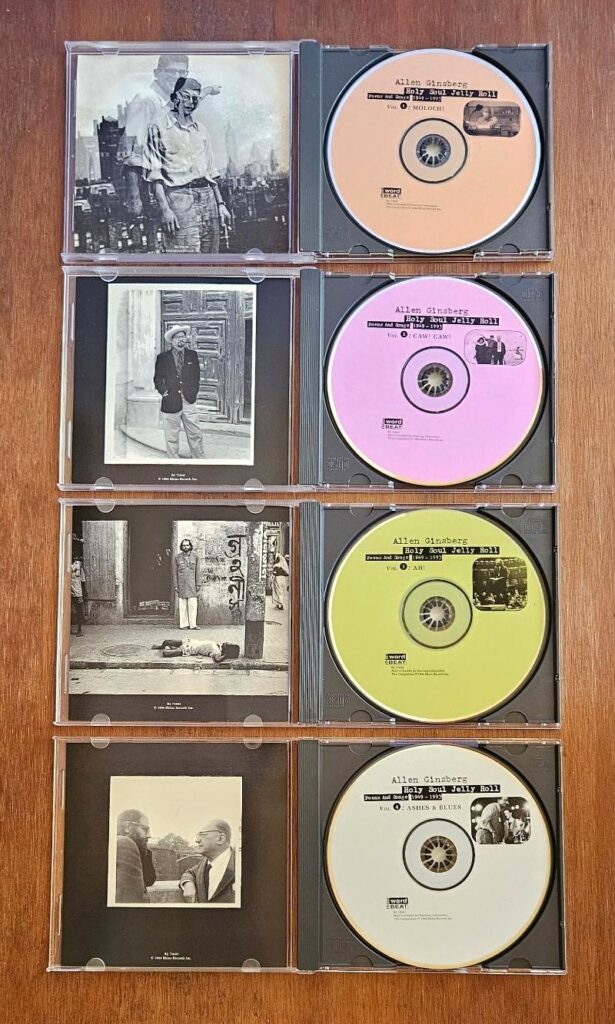
Released on September 6th 1994, Holy Soul Jelly Roll is a 4-disc box set of Allen Ginsberg’s (1926-1997) spoken poetry, including a 64-page booklet of notes, read by the author at various events over the years.
I sat down with the five hour long tracklist and spent a really chill afternoon listening. I’ve listened to many audiobooks in my day, but never one of poetry and it made for a really immersive experience. There’s light jazz playing in the background, faint static behind the tracks, and Ginsberg’s soft-spoken voice reading. Intermittently, he sings–the very first track “Walking at Night in Key West” is set to the tune of “The Saints Come Marching Home”–or gives a little introduction to his poetry, imbuing the whole album with a feeling like you’re sitting there with him. We’re at an open mic, it’s vaguely 1960-something, and Allen Ginsberg has just started reading to a hushed crowd.
And then there’s something to be said for the album to be on CDs. It’s very mid-90s (vintage now) and tangible in a way that digital media is not. There’s ritual to listening: first of all, you will need a CD-player, then gently remove the CDs from their cases, place them in the play, and sit down to listen. Oh, I suppose you could get a portable CD player and listen while out and about. But something about Ginsberg’s calm reciting lends itself to remaining still and letting the words wash over you.
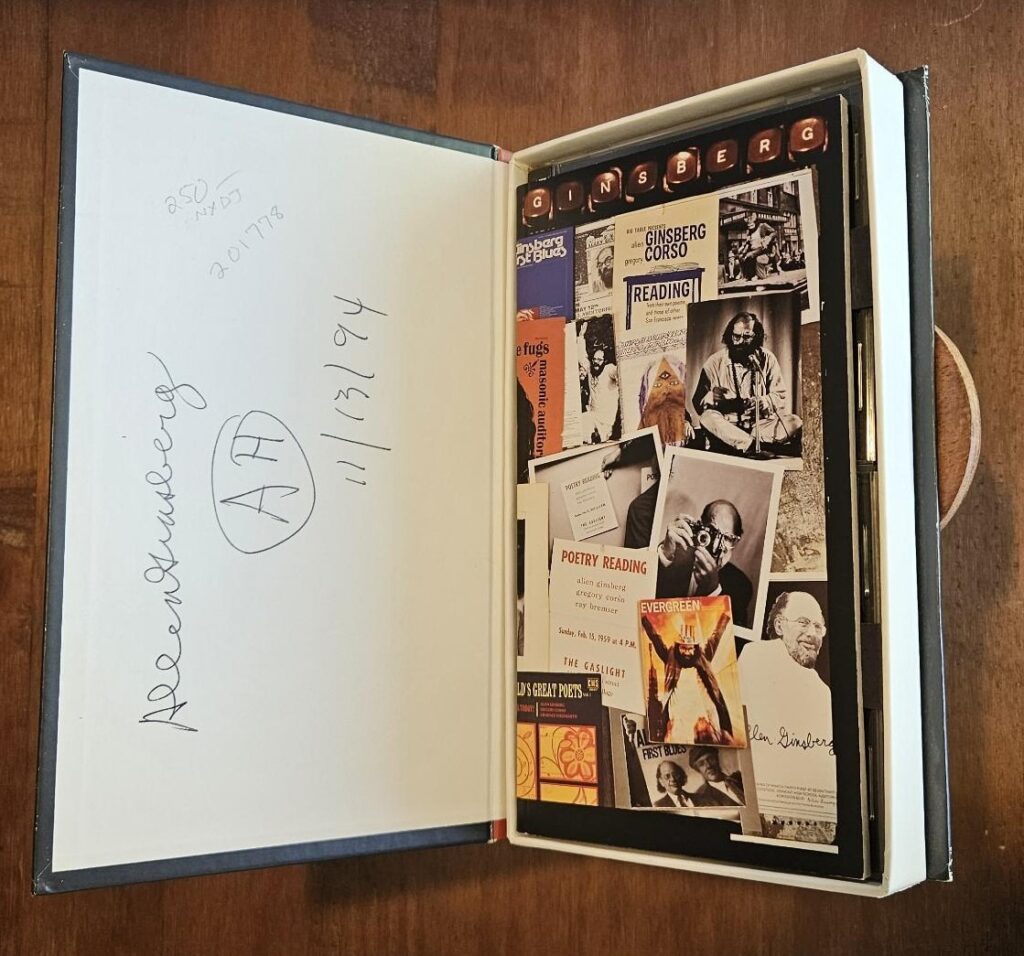
To make this particular album more substantial, it has been signed by Ginsberg on the inside of the box. On November 13th 1994 he held this box and signed it for a fan. They’d probably just bought it and then went home to listen, forever linking mid-autumn with the sound of Ginsberg’s voice. It’s kinda lovely, to think you can extend that experience nearly twenty years later.
Ginsberg died a few short years after the release of this album. He was a core member of the Beat Generation and a lasting voice in counterculture America. He once said, in a Face to Face interview with the BBC, that “a poem is like a radio that can broadcast continually, for thousands of years,” and though he may be gone, we are still here and we are still listening.