Holy Soul Jelly Roll: Poems and Songs, 1949-1993

by Allen Ginsberg

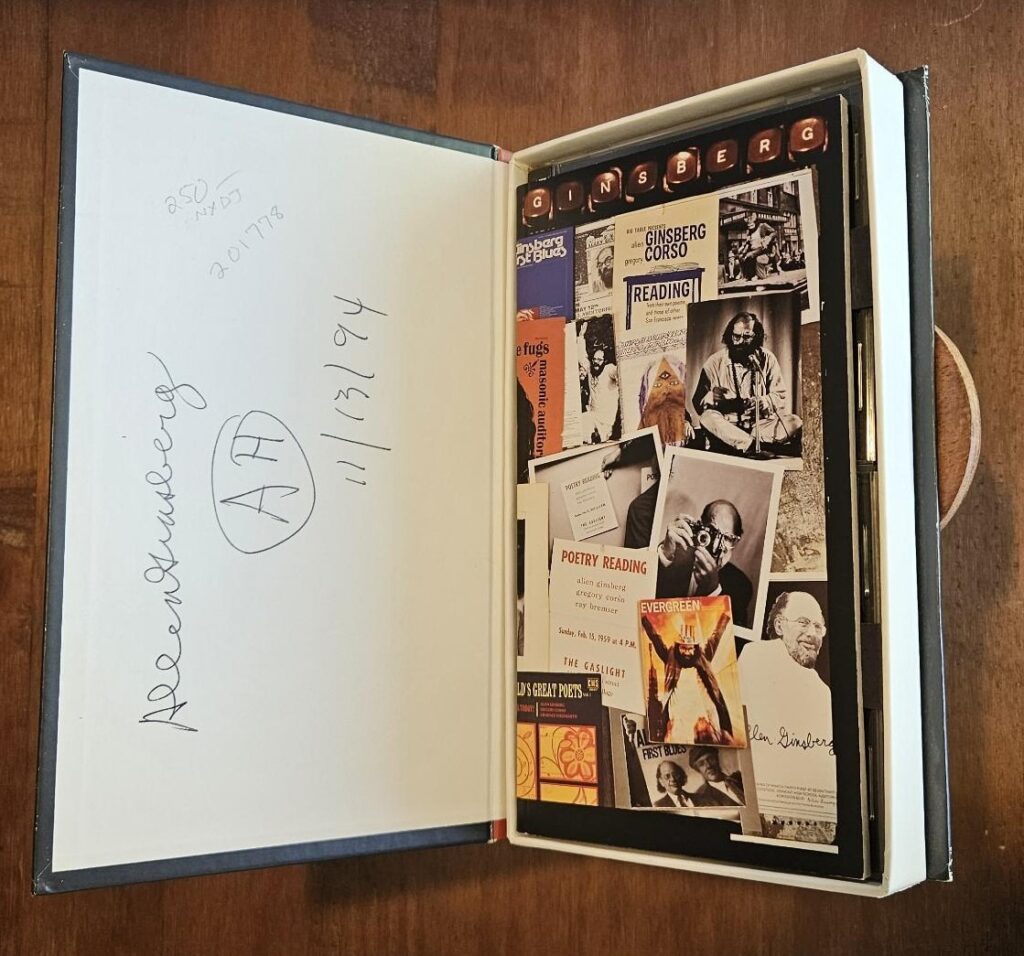
SIGNED | Rhino Records | 1994
Buy now!

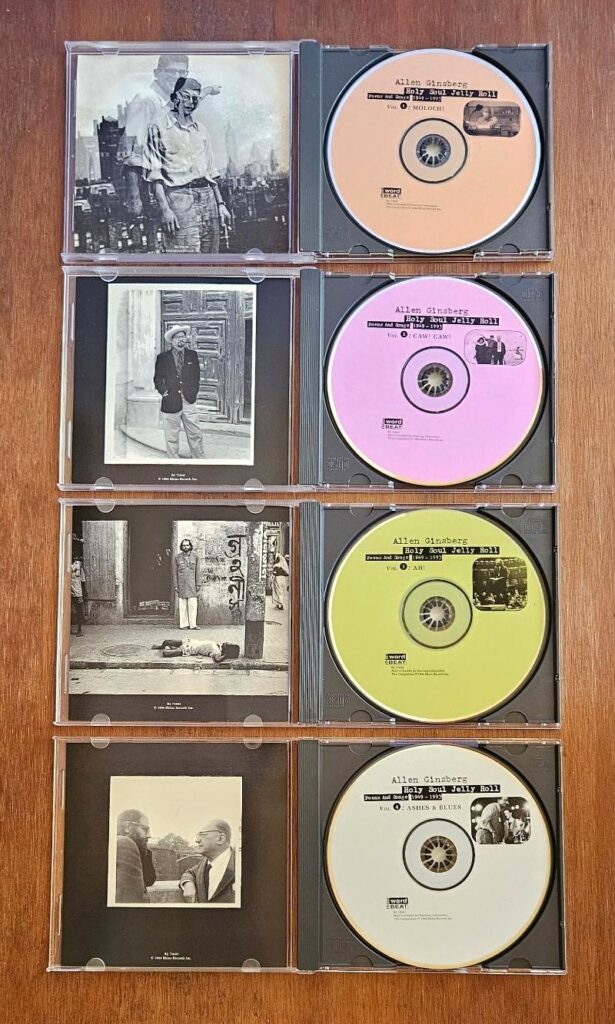
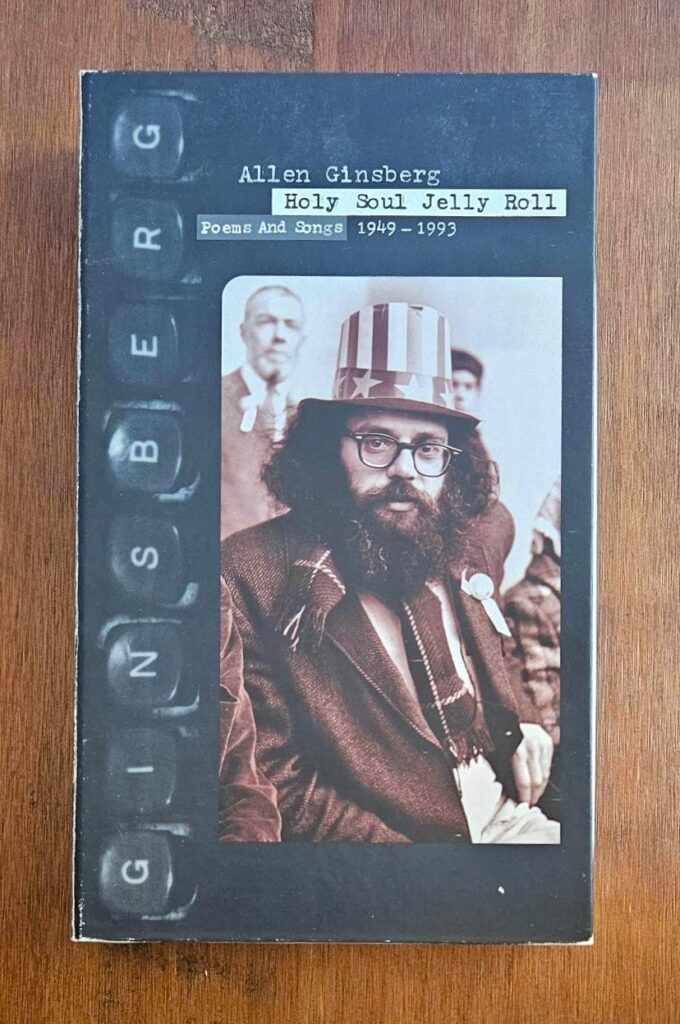
Released on September 6th 1994, Holy Soul Jelly Roll is a 4-disc box set of Allen Ginsberg’s (1926-1997) spoken poetry, including a 64-page booklet of notes, read by the author at various events over the years. 

I sat down with the five hour long tracklist and spent a really chill afternoon listening. I’ve listened to many audiobooks in my day, but never one of poetry and it made for a really immersive experience. There’s light jazz playing in the background, faint static behind the tracks, and Ginsberg’s soft-spoken voice reading. Intermittently, he sings–the very first track “Walking at Night in Key West” is set to the tune of “The Saints Come Marching Home”–or gives a little introduction to his poetry, imbuing the whole album with a feeling like you’re sitting there with him. We’re at an open mic, it’s vaguely 1960-something, and Allen Ginsberg has just started reading to a hushed crowd. 

And then there’s something to be said for the album to be on CDs. It’s very mid-90s (vintage now) and tangible in a way that digital media is not. There’s ritual to listening: first of all, you will need a CD-player, then gently remove the CDs from their cases, place them in the play, and sit down to listen. Oh, I suppose you could get a portable CD player and listen while out and about. But something about Ginsberg’s calm reciting lends itself to remaining still and letting the words wash over you. 

To make this particular album more substantial, it has been signed by Ginsberg on the inside of the box. On November 13th 1994 he held this box and signed it for a fan. They’d probably just bought it and then went home to listen, forever linking mid-autumn with the sound of Ginsberg’s voice. It’s kinda lovely, to think you can extend that experience nearly twenty years later. 
Ginsberg died a few short years after the release of this album. He was a core member of the Beat Generation and a lasting voice in counterculture America. He once said, in a Face to Face interview with the BBC, that “a poem is like a radio that can broadcast continually, for thousands of years,” and though he may be gone, we are still here and we are still listening.
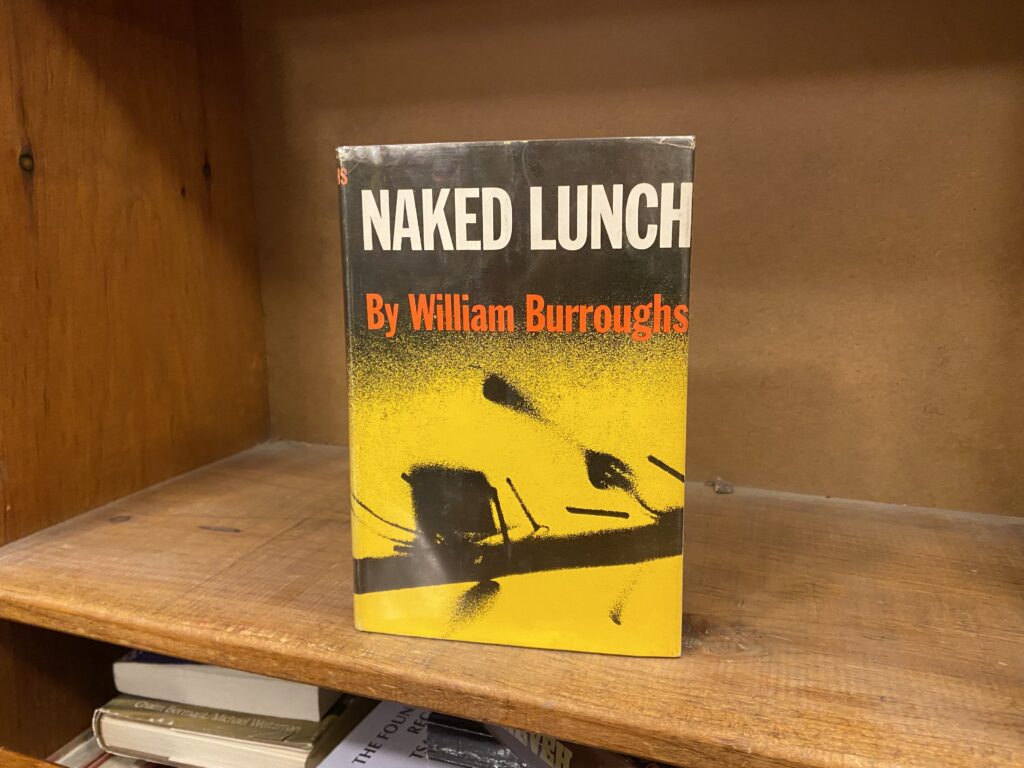
Naked Lunch

by William S. Burroughs

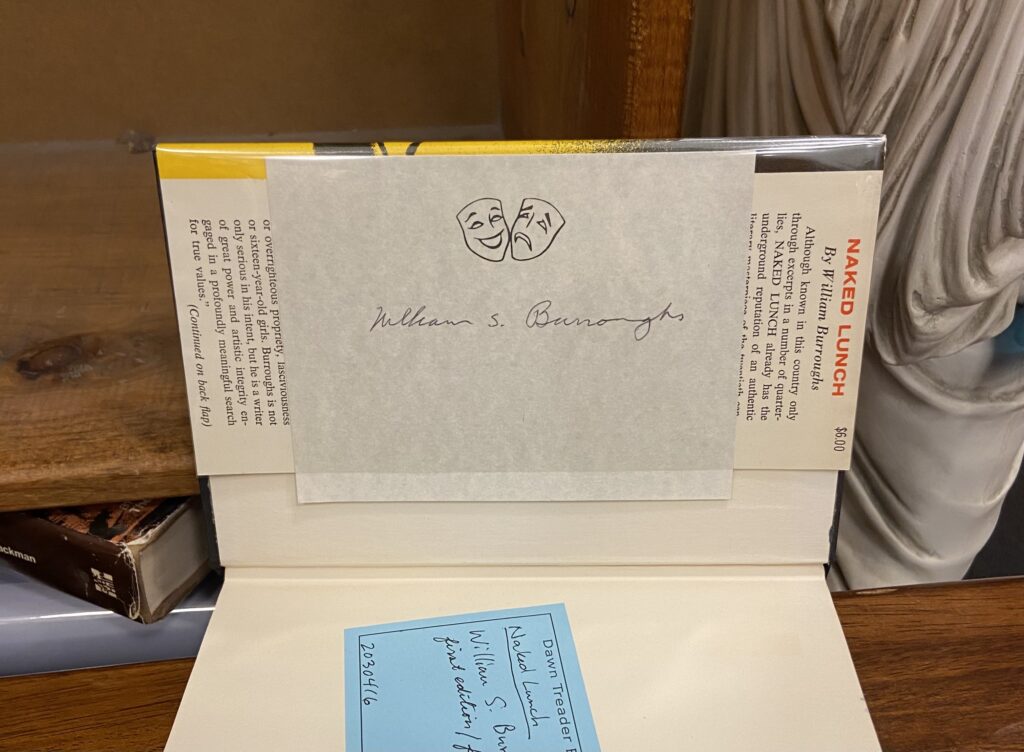
First Edition, First Printing | Signed Loose Bookplate | Grove Press | 1962

Call, email, or visit us in the store to purchase this book!

William S. Burroughs was one of the most prevalent writers of the Beat Generation, a literary subculture movement characterized by rejection of traditional narrative elements and subversive exploration of American cultural and political norms in the wake of WWII. Naked Lunch, Burrough’s most famous book, is a classic example. The experimental novel is a chronology-defying series of almost plotless vignettes that take place in the U.S., Mexico, Tangier, and the Interzone, often portraying the main narrator, William Lee (a stand-in for Burroughs) caught in the grip of some sort of vice or violence, addiction or desire. Masterfully absurd and surreal, Naked Lunch has been called “obscene,” “incomprehensible,” and “one of the best novels of the 20th century.”

Naked Lunch was first published in Paris in 1959 under the title The Naked Lunch. The additional “the,” which was never intended by Burroughs, was removed when Grove Press published the first American edition in 1962 (the delay was due to the book’s violation of American obscenity laws). Our copy of this first edition, first printing from Grove Press is particularly special because it includes a loose bookplate signed by Burroughs himself.

How does a signature like this affect the value of the book? When determining the value of a signed book, a bookseller must consider the form the signature takes. Here’s a quick lesson in the most common types, and their comparative values — presented with the caveat that value is always variable depending on many factors, especially the book’s condition.

Flat-signed books contain the author’s signature, with no additional notes, usually on the title page or another early page in the book. This is usually the most valuable version of a signed book, save for some exceptional association copies (see below).

Inscribed books contain the author’s signature and a note, usually addressed to the book’s owner — for example, if this copy of Naked Lunch were signed, “To Harry: Have a nice lunch. William S. Burroughs.” These are usually not worth quite as much as a flat-signed copy, because while the extra note adds an element of personalization, is not as meaningful to any future owner of the book who is not the addressee.

Association copies are signed with notes or addresses to someone famous or important. These can be extremely valuable, depending on the significance of each of the names on the page. For example, if this copy of Naked Lunch were inscribed to fellow Beatnik Jack Kerouac, it would be extremely valuable. If it were inscribed to someone like Rupi Kaur, it would be worth less, and possibly even less than a flat-signed copy. Book collectors value association copies because they tell a story — they imply the book has changed hands between two people of significance. What was the context of this exchange? What influence might this relationship have had on the writing of this book, or the characters, or simply the author’s life?

Signed bookplates aren’t generally considered as valuable as flat-signed or inscribed books because there is usually no way to guarantee the author ever physically touched pen to paper on that particular edition. A bookplate could have been signed at any time, then attached to or inserted into the book separately. Some bookplates themselves have value, if they are designed by particularly renowned artists. For others, like our Naked Lunch bookplate, the main source of adornment and value is the signature itself.

Come by Dawn Treader today to check out Naked Lunch and our other treasures of the Beat Generation!